← Back to the shelf
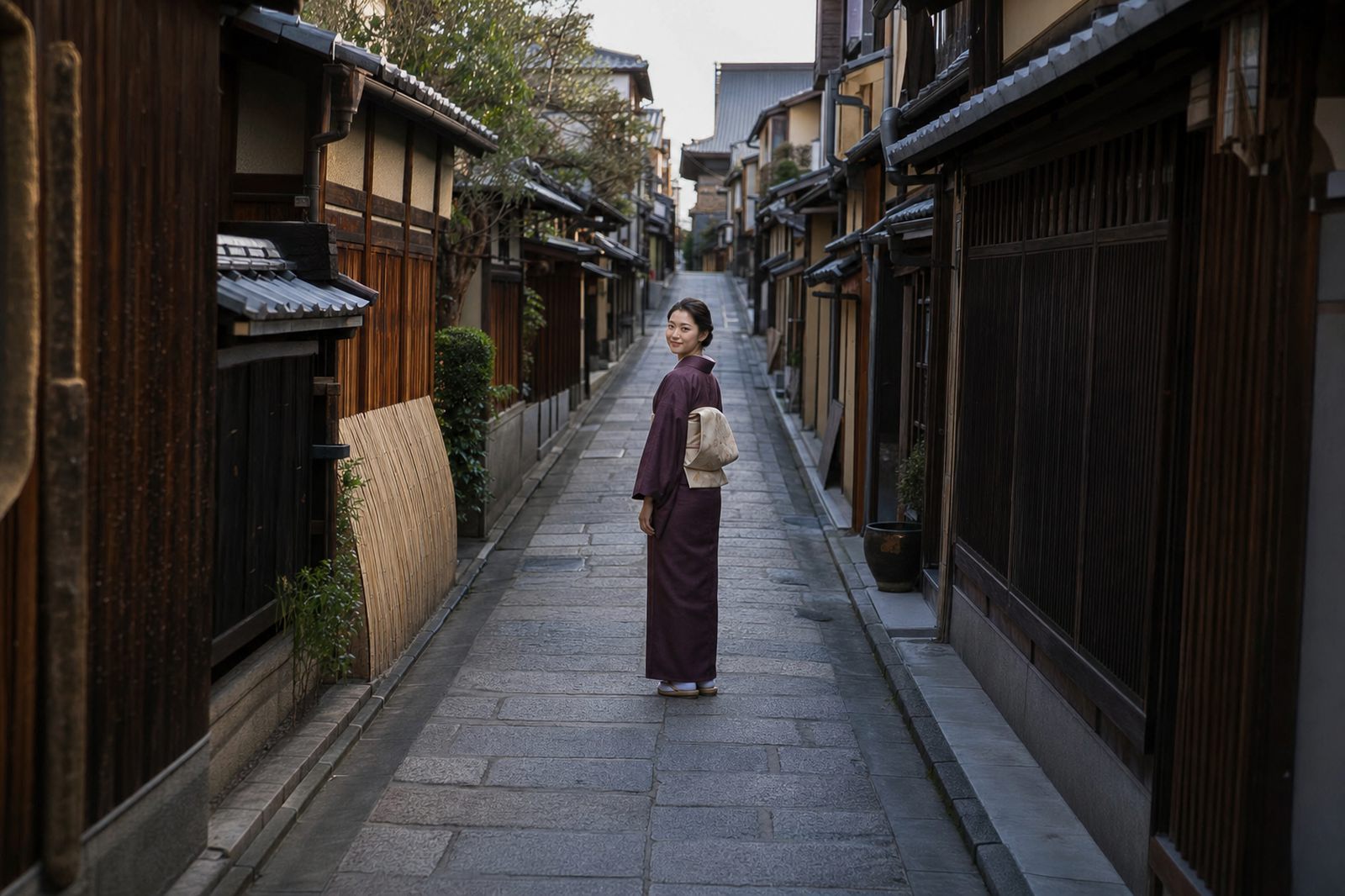
A narrow stone-paved Kyoto lane between wooden townhouses. A woman in a plum-coloured kimono has stopped in the middle of the lane and turned back over her shoulder to look at the viewer.
She looks back once, as if to say — this way.
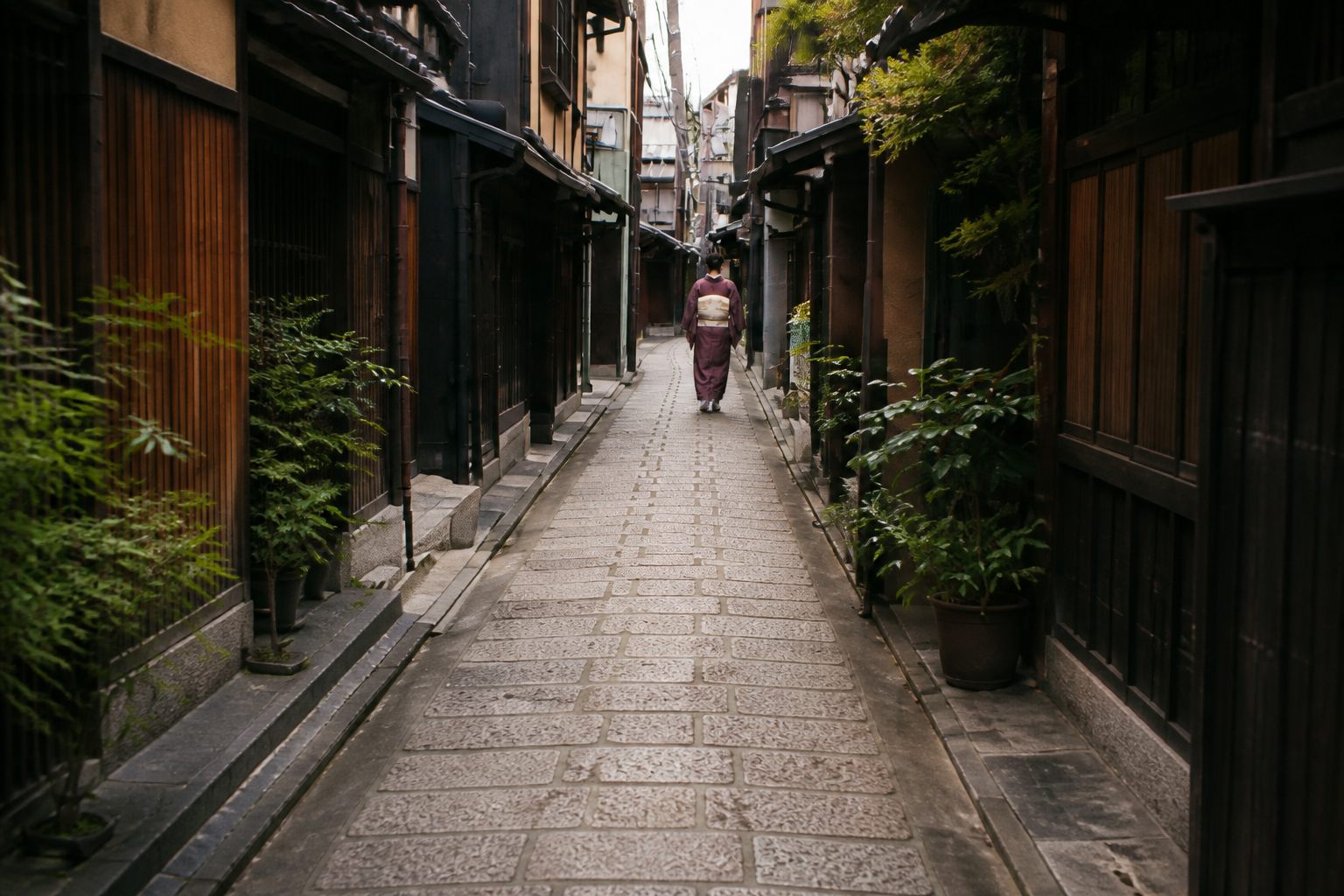
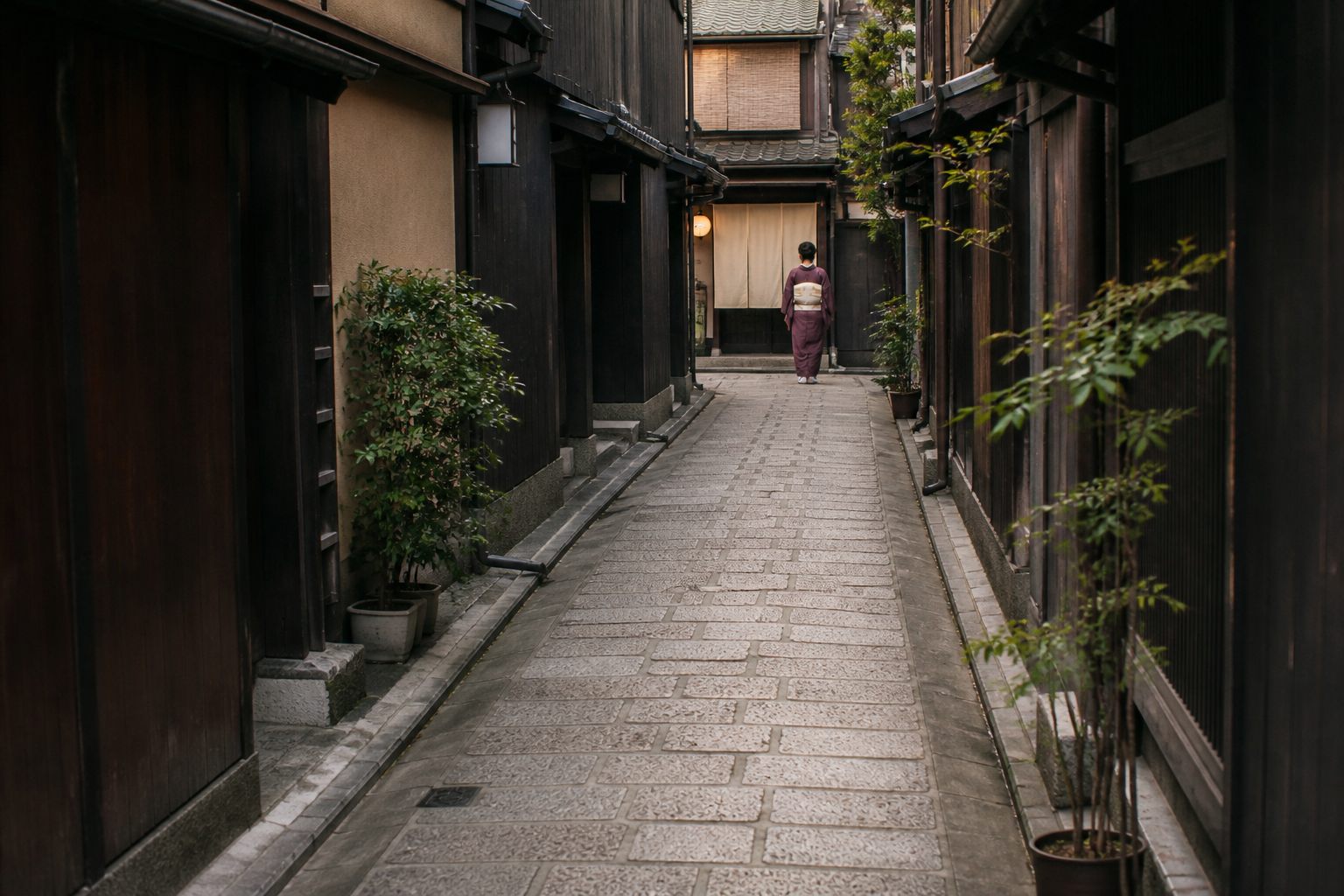
Deeper in the lane. Potted plants and wooden lattices line the way; the woman is further ahead now.
Deeper in, the town grows quiet. Keep her in sight.
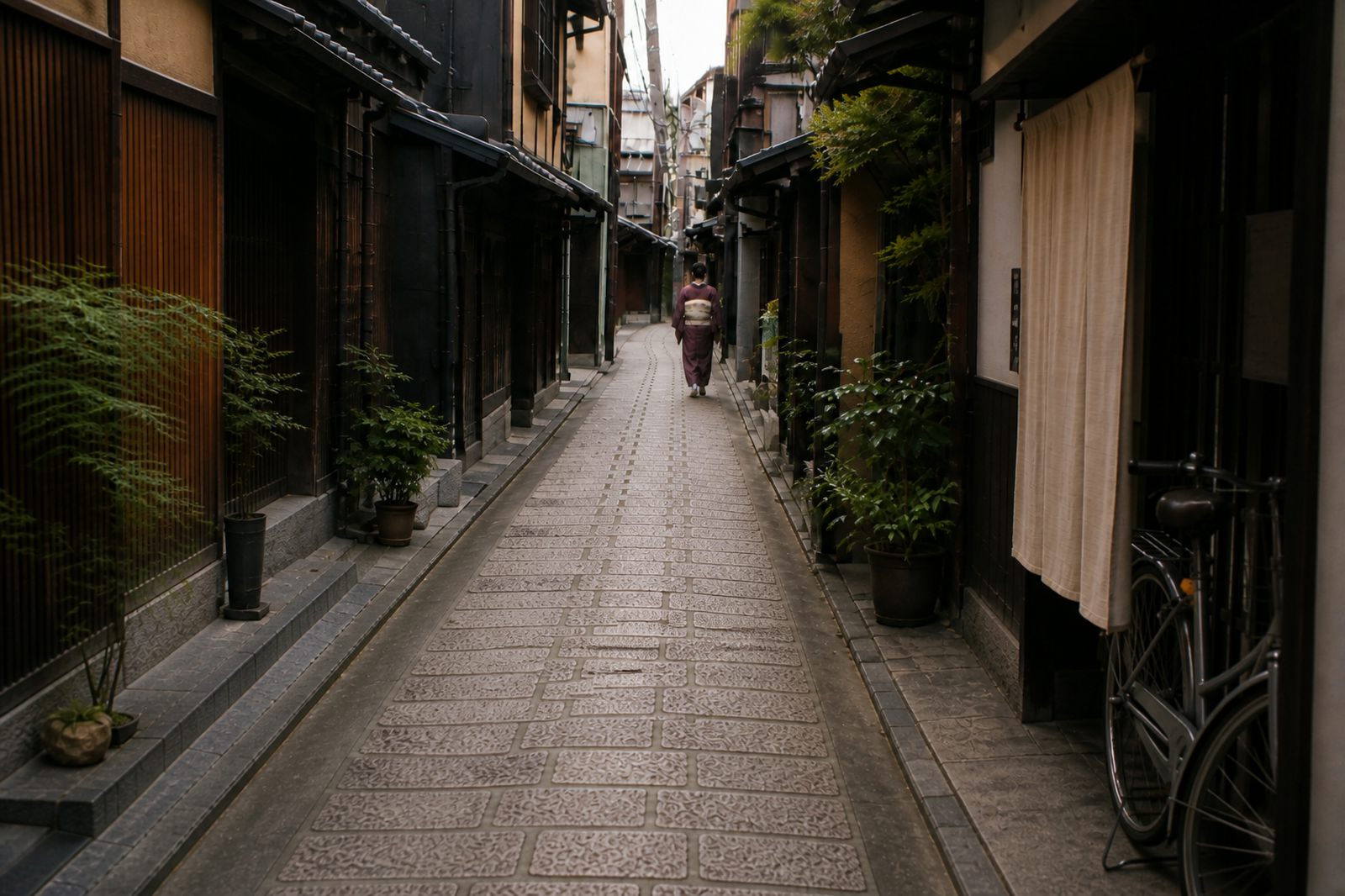
Further down the lane, the woman walks on past a small shopfront with a plain curtain and an old bicycle leaning against the wall.
She passes a shop with no sign. The bicycle says somebody’s home.
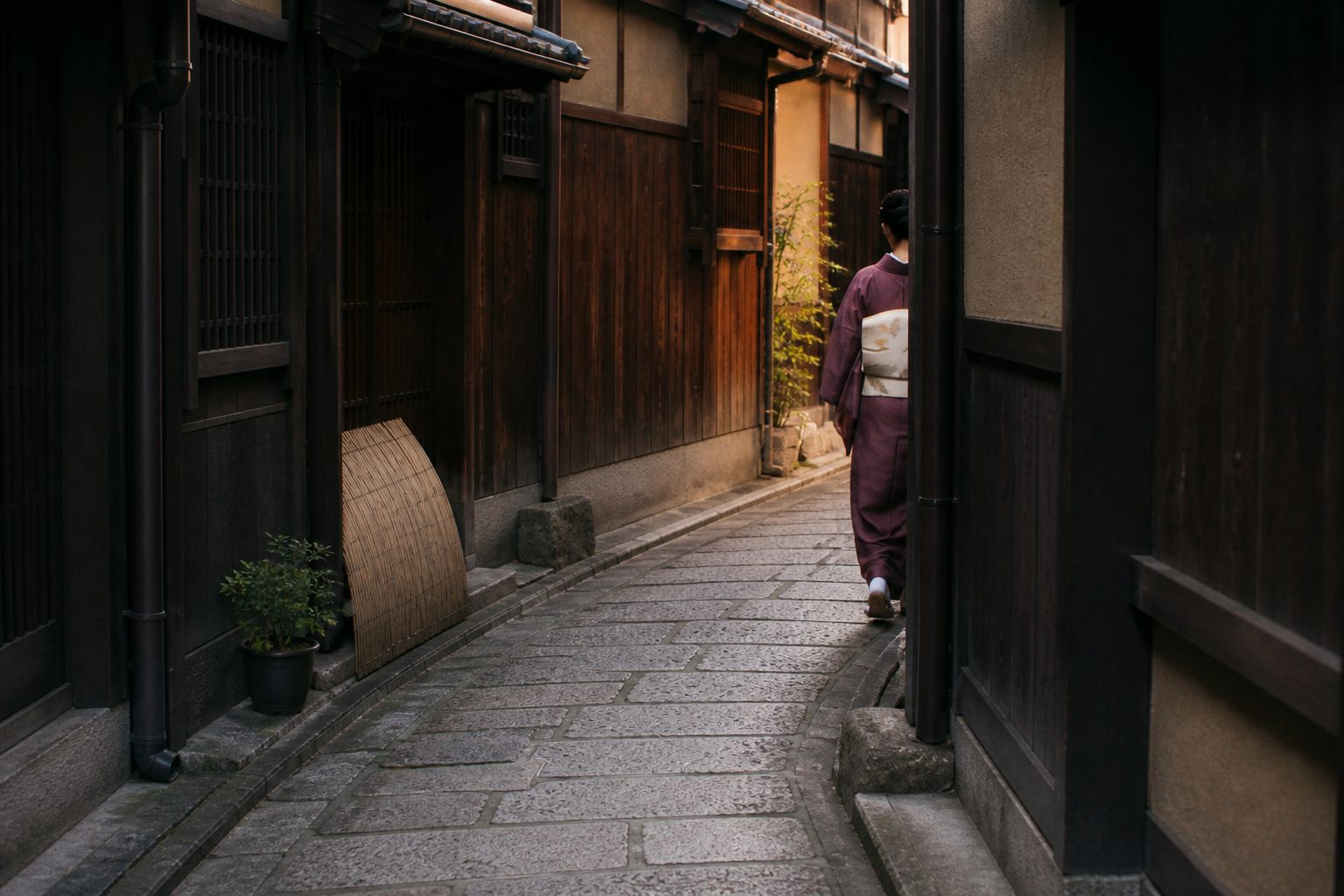
The lane bends right. The woman is half out of view, turning the corner.
The lane bends. She takes the corner first.
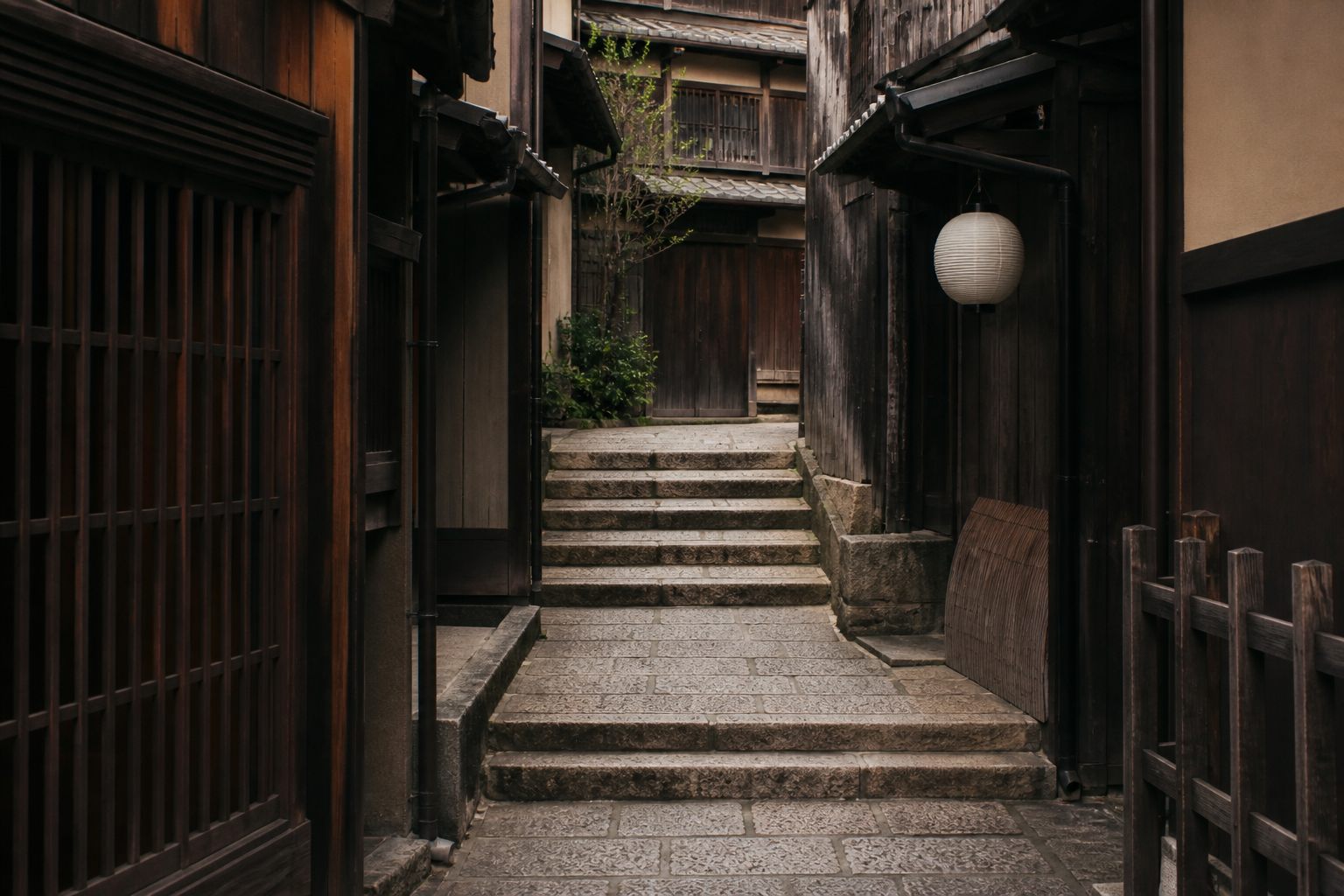
Past the bend: worn stone steps, a paper lantern not yet lit, and nobody in sight.
Past the bend — no one. Only a lantern, not yet lit.
At the far end of the lane, a small entrance with an undyed curtain glows warmly. The woman stands near it, small in the distance.
At the far end: a curtain, and a warm light behind it.
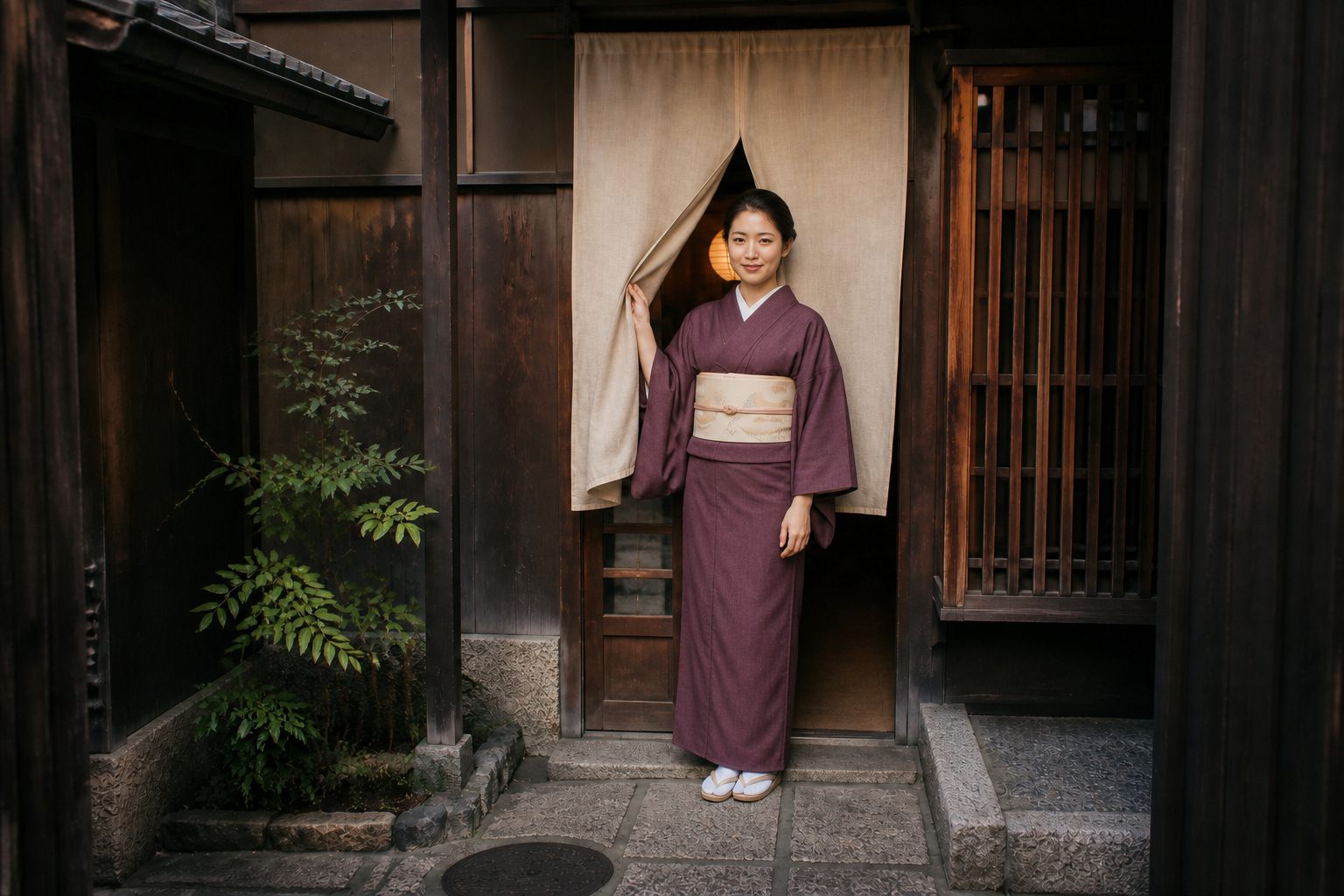
At the tea house entrance, the woman has turned to face the viewer, gently lifting the edge of the noren curtain with a calm smile.
At the curtain she turns. You’re expected.
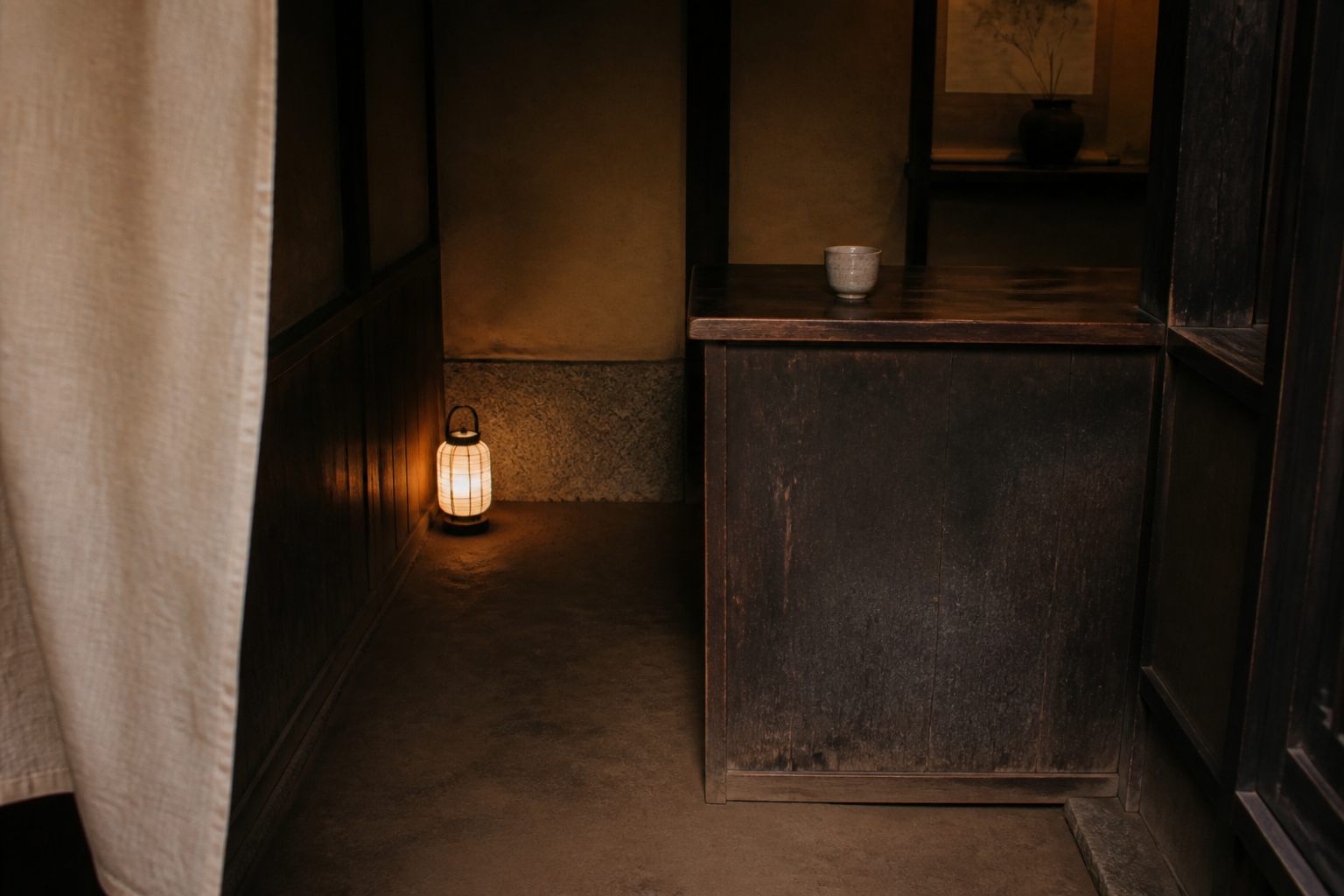
Inside the entrance: an earthen floor, a small lantern, and a single cup of tea set on a dark wooden counter.
Inside, one cup of tea is already waiting.

The walk was the introduction. The tea house at the end needs no other brochure — you already know how it feels to arrive.
Scroll to walk